Should You Upgrade from AM4 to AM5 in 2026?Three different decisions disguised as one question — and a DDR5 price crisis that's changing the math for all of them.
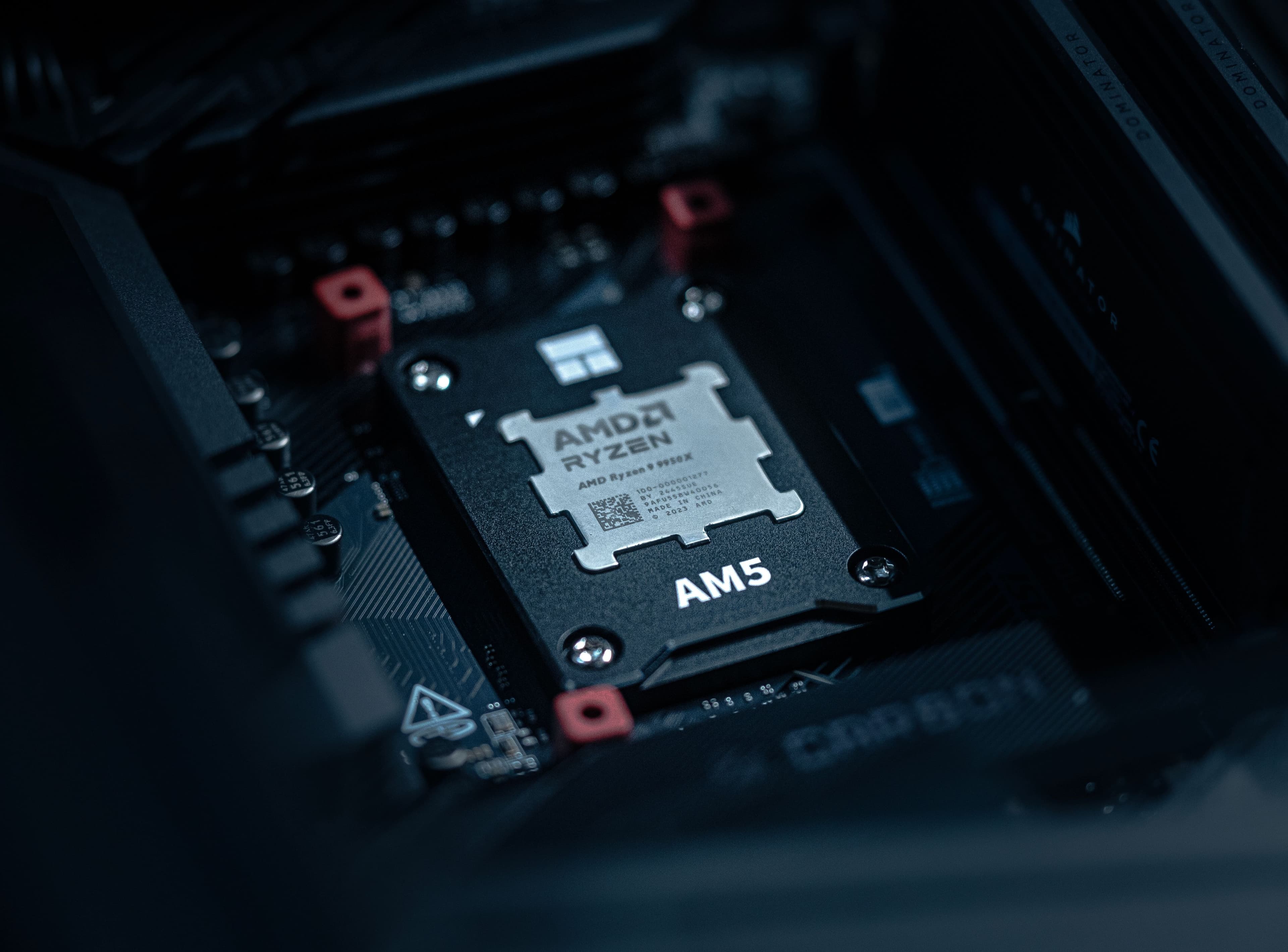
I've watched people spend $600 switching platforms to gain 15 fps at 1440p, while their $400 GPU sat there bottlenecking both setups equally. The AM4 to AM5 question sounds like a simple upgrade decision — newer socket, faster CPUs, why wouldn't you? But it's actually three completely different decisions depending on which AM4 CPU you're coming from, and only one of those decisions actually makes financial sense right now.
This question got a lot more complicated in June 2026. AMD used Computex to extend AM5's official support window out to 2029, dropped the price on the Ryzen 7 9800X3D to a historic low, and announced two new AM4 chips — the Ryzen 7 7700X3D and a 10th Anniversary Edition 5800X3D — that exist specifically to give AM4 owners one more option before they decide. At the same time, DDR5 prices have roughly quadrupled since mid-2025, which means the AM5 platform switch now costs more than it did a year ago, not less. Here's how all of that actually shakes out for your specific situation.
What This Guide Covers
1. Is AM5 Worth Switching To in 2026? (The Short Answer)
Three different people can ask "should I switch from AM4 to AM5" and get three completely different correct answers, because the question isn't really about the socket — it's about which CPU is currently in your machine and what you do with your PC. Here's the short version for each.
If you're on a Ryzen 3000 series CPU — a 3600, 3700X, or 3800X — or an older Intel chip, and you're gaming above 100 fps at 1440p: switch to AM5 now. Yes, the Ryzen 7 5800X3D 10th Anniversary Edition launching June 25, 2026 for $349 is a tempting same-socket drop-in. But it's a single-generation dead end — you'll be having this exact conversation again in two years, except next time DDR4 might not even be purchasable new. Spend the money once.
If you're already on a 5800X3D or 5700X3D: stay on AM4. The performance gap to AM5 doesn't justify a $550+ platform rebuild in 2026 — and as I'll show in Section 4, that gap mostly evaporates above 1080p anyway.
If you're building from scratch: AM5 only, no exceptions. DDR4 is no longer cheap enough to justify buying into a dead socket — I'll get into exactly how much DDR4 and DDR5 cost right now in Section 3, and the gap has closed enough that AM4 doesn't even win on price anymore for new builds.
There's one variable that complicates all three of these answers, and it's not a CPU spec — it's RAM. DDR5 pricing has moved so much in the last year that it changes the AM5 math depending on which week you're reading this. I'll cover that in detail in Section 3, but keep it in the back of your mind for everything that follows.
2. What Changed at Computex 2026 (The News That Triggered This Question)
This entire question got more complicated during Computex 2026 (June 1-6), where AMD made three announcements that directly affect anyone sitting on AM4 right now.
First, AMD extended its official AM5 socket support commitment through 2029. Previously, AMD's public language had been the vaguer "2027 and beyond" — Computex turned that into a hard date. OC3D, VideoCardz, and Tom's Hardware all covered the announcement, and AMD's own blog confirmed it directly. Three extra years of stated platform life is the single biggest factor in Section 5's runway argument, so hold onto it.
Second, AMD announced two new CPUs aimed at giving AM4 owners something to do besides switch platforms. The Ryzen 7 7700X3D launches July 16, 2026 on AM5 at $329 MSRP — 8 cores, 104MB of total cache, 4.5GHz boost, and a 120W TDP, positioned as the budget entry into AM5's X3D lineup. And on the AM4 side, the Ryzen 7 5800X3D 10th Anniversary Edition arrives June 25, 2026 for $349, with identical specs to the original 5800X3D. It's the same chip with a commemorative sticker, but it's also the cheapest meaningful upgrade an AM4 owner can make without touching their motherboard.
Third, the Zen 6 roadmap firmed up. Codenamed "Olympic Ridge" and built on TSMC's 2nm process, Zen 6 is expected to land on AM5 desktops in 2027, according to both Tom's Hardware and TweakTown. Zen 7 is also widely reported as an AM5 part, though that's less confirmed. Put together, these three announcements are why this article exists — the AM4-to-AM5 decision now has a longer time horizon on the AM5 side and a cheaper one-generation option on the AM4 side, and you need to know which one actually fits your situation.
3. The Real Cost of Switching to AM5 Right Now
Here's the full bill for switching from AM4 to AM5 today, broken into its three unavoidable pieces. The CPU: a Ryzen 7 9800X3D is currently sitting at $429, which Tom's Hardware flagged as a historic low as of June 2026 — or you can go with the new Ryzen 7 7700X3D at $329 MSRP once it launches July 16. The motherboard: a B650 board runs roughly $150-180. And the RAM: 32GB of DDR5-6000, which has a PCPartPicker price floor of $375 as of June 3, 2026, per Tom's Hardware — and that's the floor, not the average. Add it up and you're looking at $800-950 for the full platform, depending on which CPU and which RAM kit you land on.
Now compare that to staying on AM4. The Ryzen 7 5800X3D 10th Anniversary Edition is $349 at AMD MSRP, available June 25, 2026, with the same specs as the original 5800X3D. If you're already running a B450 or B550 board with DDR4 installed, that $349 is the entire cost — no motherboard, no RAM, no compatibility gymnastics beyond a BIOS update.
The RAM situation is worth sitting with for a second, because it's moved fast. DDR4 32GB kits now run roughly $150-180, up from $60-90 back in October 2025, according to Tom's Hardware. That's already a rough doubling. But DDR5 32GB has moved further and faster — kits that were under $95 in mid-2025, per Unibetter-ic's pricing data, now have a floor of $375. DDR5 has gone from being cheaper than DDR4 to costing more than double what DDR4 costs, in under a year.
DRAM shortage pricing alert
SK Hynix has warned that RAM supply constraints will continue through 2030, according to Tom's Hardware. Don't plan your upgrade timeline around DDR5 prices dropping back down — there's no relief on the horizon from the manufacturer side.
This is exactly the wildcard I flagged in Section 1. If you're pricing out an AM5 build today, that $375 RAM floor is doing a lot of the work in pushing your total toward $950 rather than $800. And if SK Hynix is right about constraints continuing through 2030, there's no obvious relief coming — which is part of why "wait for DDR5 to get cheap again" isn't a strategy I'd bank on for anyone who needs a working PC in the next year.
4. Gaming Performance: What You Actually Gain (and What You Don't)
At 1080p, the gap between AM4's best chip and AM5's best chip is real and visible. NoobFeed's March 2026 testing put the Ryzen 9 9850X3D at roughly 56% faster than the 5800X3D, and the 9800X3D at roughly 35% faster. If you're playing competitive shooters at 1080p on a high-refresh monitor and your 5800X3D is capping out below your monitor's refresh rate, that 35-56% is the difference between "capped" and "not capped."
At 1440p, the gap narrows considerably — and this is where most people actually live. NoobFeed's data shows the 5800X3D is sufficient for roughly 140 fps in most 1440p titles, which covers a 144Hz monitor comfortably. You only need the 9800X3D if you're chasing 200+ fps at 1440p — which mostly means competitive titles on a 240Hz+ panel, not the AAA games most people are actually playing at this resolution.
At 4K, the gap essentially disappears. Multiple sources agree on this: at 4K, your GPU is the bottleneck regardless of which of these CPUs is feeding it, and the CPU choice stops mattering. This is also where the 5800X3D's staying power shows up most clearly — NotebookCheck and Hardware Unboxed data both show the 5800X3D still matching a Core Ultra 9 285K, Intel's current flagship, in many titles. A five-year-old AM4 chip trading blows with Intel's newest CPU isn't a fluke; it's the 3D V-Cache architecture doing exactly what it was designed to do.
If you're coming from a Ryzen 3000 chip rather than already owning a 5800X3D, the picture changes completely — and this is the scenario where AM4 still has something left to give. beatcopgame.com's May 2026 testing found that upgrading from a 3600 or 3700X to a 5800X3D produced a roughly 47% average FPS improvement. That's a same-socket, same-motherboard, same-RAM upgrade for $349 that gets you most of the way to current-gen gaming performance — which is exactly why Section 1's first profile calls this option "tempting" even while warning it's a dead end.
Where AM5 pulls ahead unambiguously is productivity. NoobFeed's testing found the 9850X3D running 29-46% faster than the 5800X3D in compression and other productivity workloads. If you do video encoding, large compile jobs, or anything CPU-bound outside of gaming, that gap doesn't narrow at higher resolutions the way the gaming gap does — it's just faster, full stop, and it's the strongest argument for AM5 if your use case includes real production work.
5. AM5's Upgrade Runway: What the 2029 Commitment Actually Means
The headline number from Section 2 — AM5 supported through 2029 — only matters if there's actually hardware coming to fill that runway. There is. Zen 6, codenamed "Olympic Ridge" and built on TSMC's 2nm node, is expected to land on AM5 desktops in 2027, per Tom's Hardware and TweakTown. Zen 7 is also widely reported as an AM5-compatible architecture, though that's less firmly confirmed than Zen 6 at this point. Either way, a B650 board purchased today is realistically a Zen 5 and Zen 6 board, with a decent shot at Zen 7 as well.
overcentral.com has framed this as a single AM5 motherboard potentially spanning roughly seven years of CPU upgrades — from the original Zen 4 launch in 2022 through to whatever ships in 2029. That's not a marketing number, it's a description of what AM5's actual lifecycle looks like if AMD holds to what it announced at Computex. Compare that to where AM4 sits today: the 5800X3D Anniversary Edition is, by AMD's own roadmap, the last meaningful upgrade that socket will ever get.
The contrast with Intel sharpens this further. Intel's LGA1851 socket — the current Core Ultra 200 platform — doesn't have anything like AMD's stated multi-year commitment attached to it. If you're choosing a platform for the next several years rather than just the next CPU, AM5's 2029 commitment is the kind of stated roadmap Intel hasn't matched on the desktop side. For anyone weighing a fresh build between AM5 and Intel's current socket, that's a meaningful difference in how many CPU generations your motherboard purchase is likely to absorb.
6. Who Should NOT Switch to AM5 Right Now
If you're already running a 5800X3D or 5700X3D, the case against switching is straightforward: you're sitting on a CPU that, per Section 4, still matches Intel's current flagship in many titles and is sufficient for roughly 140 fps at 1440p. Spending $800-950 to move to AM5 for a gap that mostly disappears above 1080p isn't a close call. Stay put.
If your total upgrade budget is under $700, AM5 isn't realistically on the table anyway — the platform switch alone runs $800-950 before you've spent anything on the rest of your system. At that budget, the 5800X3D Anniversary Edition at $349 (if you're already on AM4) or putting that money toward a GPU upgrade will do more for your actual gaming experience than a partial AM5 build.
If you're GPU-bound — and Section 4 makes clear that's most people at 4K, and a lot of people at 1440p too — a CPU platform switch won't move your frame rate. Before spending anything on AM4 vs AM5, confirm where your actual bottleneck is. If your GPU is sitting at 95-100% utilization while gaming, no CPU upgrade, on any platform, will change your numbers.
And if you're already comfortable on AM4 with something newer than a Ryzen 3000 chip — say a 5700X or a non-3D 5800X — and you're not in a hurry, waiting for Zen 6 in 2027 is a reasonable position. You're not leaving much performance on the table in the meantime, and Zen 6 landing on the same AM5 socket means an AM5 purchase now isn't wasted if you do wait — but if you don't need to spend the money today, you don't have to.
7. Who Should Switch to AM5 Right Now
If you're on a Ryzen 3000 series chip — 3600, 3700X, 3800X — Section 4's numbers make the case clearly. A same-socket 5800X3D Anniversary upgrade gets you roughly 47% more average fps for $349, per beatcopgame.com's May 2026 testing. But that's a one-generation ceiling, and Section 1's warning stands: you'll be back here in two years. If you can stretch to the $800-950 AM5 platform cost now, the 9800X3D or 9850X3D gets you 35-56% more than even the 5800X3D at 1080p, per NoobFeed — plus seven years of upgrade runway through 2029 per Section 5.
The same logic applies if you're on older Intel — anything that predates the Core Ultra 200 series is giving up meaningful ground in both gaming and the productivity numbers from Section 4. There's no same-socket "Anniversary Edition" option on the Intel side to soften the cost, which actually makes the AM5 case slightly cleaner: you're paying the platform cost either way, so you may as well land on the platform with the longer stated runway.
If you're building from scratch, Section 1's third profile already covered this: AM5, no exceptions. DDR4's $150-180 pricing for 32GB has closed most of the gap with DDR5's $375 floor — DDR4 used to be the budget-friendly reason to consider a "new AM4 build," and that reason has largely evaporated. Pay the AM5 premium once and get the 2029 runway.
Content creators doing regular video encoding or compile-heavy work should weight Section 4's productivity numbers heavily — a 29-46% gap in compression workloads compounds across every export, every render, every week. And competitive 1080p gamers chasing 200+ fps are the other group where the 1080p gaming gap (35-56% per NoobFeed) translates directly into a frame rate cap most 5800X3D setups can't clear. Both groups are paying for a real, measurable improvement, not a marginal one.
8. The Verdict
To bring this back to where it started: if you're on a Ryzen 3000 series CPU (3600, 3700X, 3800X) or older Intel, and you game above 100 fps at 1440p, switch to AM5 now. The 5800X3D Anniversary Edition drop-in is tempting, but it's a single-generation dead end — you'll be making this decision again in two years. If you're already on a 5800X3D or 5700X3D, stay on AM4. The performance gap to AM5 doesn't justify a $550+ platform rebuild in 2026. And if you're building from scratch, AM5 only, no exceptions — DDR4 is no longer cheap enough to justify buying into a dead socket.
The one thing that could change this calculus is DDR5 pricing. SK Hynix's warning about supply constraints through 2030 means I wouldn't plan around a price drop — but if DDR5 32GB kits did fall back toward, say, $150-200, the AM5 total cost drops to something closer to $575-725, and the "switch now" recommendation gets meaningfully easier to justify even for people closer to the borderline. Keep an eye on DDR5 pricing specifically — it's the single number most likely to shift this entire article's math in either direction.
If you're sitting on Ryzen 3000 or older Intel hardware, don't let "Zen 6 is coming in 2027" talk you into waiting. You'd be giving up 35-56% of current-gen 1080p performance and the entire 47% gain available from even a same-socket 5800X3D swap, for at least another year, on hardware that's already showing its age. Zen 6 lands on the same AM5 socket — buying in now doesn't strand you when it arrives. Waiting just means you're slower for longer.
Frequently Asked Questions
Is AM4 still good in 2026?
Yes, with one major caveat. If you're running a 5800X3D or 5700X3D, AM4 is still genuinely competitive — the 5800X3D matches a Core Ultra 9 285K in many titles according to NotebookCheck and Hardware Unboxed benchmark data, and at 1440p it's still good for roughly 140 fps in most games. If you're running a Ryzen 3000 series chip (3600, 3700X, 3800X) or older, AM4 is starting to show its age — NoobFeed's March 2026 testing found the 9850X3D is roughly 56% faster than the 5800X3D at 1080p, and that gap is even larger for 3000-series chips. AM4 isn't dead, but where it sits on the "still good" spectrum depends entirely on which CPU is actually in the socket.
Is it worth upgrading from Ryzen 5600X to AM5?
Not yet, in most cases. The 5600X sits in an awkward middle ground — it's not a 5800X3D-tier chip that justifies staying put, but it's also not old enough that the AM5 jump pays for itself immediately. Your best move on AM4 right now is the Ryzen 7 5800X3D 10th Anniversary Edition, available June 25, 2026 for $349 with the same specs as the original — a same-socket drop-in that requires no motherboard or RAM changes. If you're already gaming above 100 fps at 1440p and want to push toward 200+ fps in competitive titles, that's when AM5 starts to make sense — but at $800-950 for the full platform switch versus $349 for the 5800X3D Anniversary Edition, run the numbers for your specific resolution and target frame rate before committing either way.
Will Zen 6 come to AM5?
Yes — AMD confirmed AM5 support through 2029 at Computex 2026, up from the previously stated "2027+" window, and Zen 6 (codenamed "Olympic Ridge," built on TSMC's 2nm process) is expected to land on AM5 for desktop in 2027, according to Tom's Hardware and TweakTown. Zen 7 is also widely reported as a planned AM5 part, though that's less firmly confirmed than Zen 6. Practically, that means a B650 motherboard bought today could plausibly carry you through Zen 5, Zen 6, and potentially Zen 7 — overcentral.com has floated a single AM5 board spanning roughly 7 years of CPU upgrades, a meaningfully longer runway than AM4 ever offered from this point in its lifecycle.
How much does it cost to switch from AM4 to AM5 right now?
Expect $800-950 for the full platform: a Ryzen 7 9800X3D ($429, a Tom's Hardware-tracked historic low as of June 2026) or the cheaper Ryzen 7 7700X3D ($329 MSRP, available July 16, 2026), a B650 motherboard (roughly $150-180), and 32GB of DDR5-6000 RAM, which has a PCPartPicker price floor of $375 as of June 3, 2026 per Tom's Hardware. That RAM number is the one that's changed the math — DDR5 32GB kits were under $95 in mid-2025 and have since climbed past $375, more than quadrupling. Compare that to staying on AM4 with the Ryzen 7 5800X3D 10th Anniversary Edition at $349 — if your existing board is a B450 or B550 with DDR4 already installed, that's the entire cost, no motherboard or RAM required.
Should I wait for Zen 6 before upgrading?
If you're on a 5800X3D or 5700X3D, yes — Zen 6 desktop parts aren't expected until 2027, and the performance gap from those chips to current AM5 options doesn't justify a $550+ platform rebuild today, let alone right before a generational jump. If you're on a Ryzen 3000 series chip or older Intel hardware and already gaming above 100 fps at 1440p, don't wait — you're leaving real performance on the table for another year or more, and DDR5 prices are more likely to stay elevated than to drop sharply before Zen 6 arrives. The B650 motherboard you'd buy for a Ryzen 7000 or 9000 chip today is the same board that takes a Zen 6 chip in 2027, so an AM5 purchase now isn't a purchase you'll regret when Zen 6 lands — it's the first step into a platform built to absorb it.
What to Read Next
- When to Upgrade Your CPU → What to look for in a CPU upgrade before you commit to a platform.
- What to Upgrade First on Your PC → If DDR5 prices are making you hesitate, this covers the order of operations for spending your upgrade budget.
- Should You Upgrade Your PC or Buy New? → If you're questioning the whole upgrade vs. rebuild decision, this is the next step.
- Is Building an AM4 PC Worth It in 2026 to Dodge the DDR5 Price Crisis? → The full cost breakdown of staying on AM4 with DDR4 versus switching to AM5 with DDR5, using live 2026 prices.